


Discovery
My last speech was at my son’s wedding, in a lovely park in the heart of Shaerbeek. The topic was travel, renewal through change, and discovery. The settings, and the audience, were totally different from what was the steady routine of business or technical talks I gave for years in my different jobs, in the UK, the US or in Europe. In the early years I had to overcome a natural fear of speaking publicly, in particular when I wasn’t sure of the audience. Of course confidence only builds up with time, experience, and various opportunities.
Looking back at the many occasions for me to speak publicly, I think now that I mostly enjoyed the challenge, and had few cases of later rating my one performance as lamentable – but there were a few. What about what I learned over the years, with talking to a broad scope of audiences, customers, staff, colleagues, perfect strangers or small circles of people I knew professionally?
Structure
Firs of all the structure is all important. That is the series of steps to a successful speech. Since the very beginning, some forty years ago (!) I have followed the same pattern: introduction, main argument, conclusion. The introduction is of fundamental importance. It is about telling the audience about what they are about to hear, the purpose of the speech, its boundaries, including what it is not going to be about. The latter is crucial, particularly if there is to be some questions after the speech itself.
However the importance of the preamble is not only to clarify the purpose, but also to get some feel for the audience, and how to pitch the tone, to ensure genuine understanding. As I got more experience I understood how vital that question of early understanding is.
Tuning
Like wars, each speech is unique, even if it is repeated to different audiences. The audience itself, the circumstances of the speech are unique. In order to tune to the audience the first five minutes are crucial. In most cases of failure, in my experience, failing to take advantage of the preamble, for whatever reasons, may be fatal.
An example of such was a technical speech I gave, in Paris, to a small audience of Japanese traders. The subject was a product presentation, of a complex system based largely on the use of Microsoft Excel. The audience was po-faced, I spoke in English with support from diagrams, and a short demonstration. While the technical part of the presentation was okay, I failed to really communicate with the audience who did not understand the purpose and benefits of the product.
Mastery
The main body of the speech, if reasonably planned, on a subject that is, that must be, totally mastered, should be straightforward, although staying tuned to the listeners remains essential. At this point it is worth mentioning the special case of scholarship public statements.
For it is accepted, along the old adage that to learn a subject in depth there is no better way than teaching it, that however the level of expertise, at the edge of knowledge, mastery of any subject, particle physics or astronomy, or molecular biology, is always relative. Speaking about a business situation, whether as part of a sales pitch, or an exposé to a small specialised audience, the main body should lead naturally to the conclusion, which in many instances is an invitation to listen to more.
Questions
The conclusion is also, if it is the context of the speech, an introduction to questions. That phase of the event may superbly lead to more opportunities (outside the purely domestic type such as a wedding), either to dress the same audience, or a wider one, after a successful outcome. In stating this I am evidently biased toward commercial situations. A botched questions/answers session may also ruin the benefits of an otherwise well received presentation, is the debate gets off the subject, a matter for the speaker, or host, to control.
Politics and History
However how about politics and philosophical public speaking? I have no experience of politics, and my interest therein is more satisfied through blogs and literature. So it goes for history or geopolitics, two subjects best suited to the written word, in my view, than rhetoric. However we may observe the scarcity of politicians capable of expressing clearly views of their own, and convincing arguments. We shall leave this subject for another post, as it should be now obvious to most readers of this blog that I only have a limited amount of time to consider the merits (?) of our cretinous and uneducated political class.
On the subject of history, I had only few opportunities to express myself publicly on topics I have been interested in, and had some knowledge of, which I regret. This too may be the topic for another post.
Conclusion
In conclusion, building confidence in public speaking is all about honing your skills, mastering your subject matter, and tailoring your approach to suit your audience. Remember, every speaking opportunity is unique, so take the time to prepare and adapt. With practice and the right mindset, you can transform your nerves into enthusiasm, making your message resonate even more. Embrace each public speaking occasion as a chance to grow and connect, and soon you’ll find that confidence comes naturally. Happy speaking!
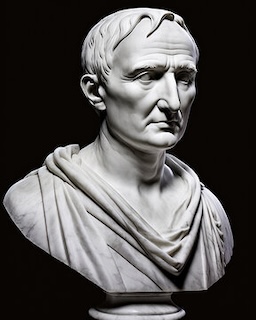
Picture source: “A fresco by Cesare Maccari (1840-1919) depicting Roman senator Cicero (106-43 BCE) denouncing Catiline’s conspiracy to overthrow the Republic in the Roman senate. (Palazzo Madama, Rome). Note: illustrations commonly show the senators arranged in a semicircle around an open space where orators were deemed to stand; in reality the structure of the existing Curia Julia building, which dates in its current form from the Emperor Diocletian, shows that the senators sat in straight and parallel lines on either side of the interior of the building. The Senate was also larger and more dull.”

Leave a Reply