
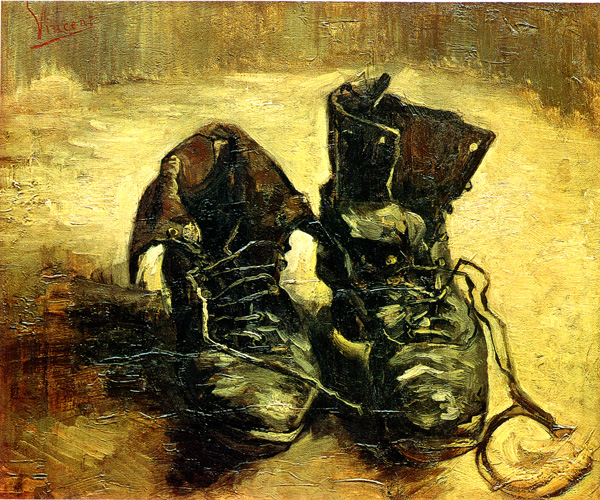


![Permanent: A Pair of Shoes[4] (1885), by Vincent van Gogh.](https://i0.wp.com/glassandsand.com/wp-content/uploads/2026/01/c91de-vangoghshoes1885.jpg?resize=600%2C500&ssl=1)
Permanent is a big word
A permanent ban on words sounds like delusion, on several accounts. Firstly what is permanent in the Universe? Secondly, banning words is historically problematic, for words are fluctuating in their meaning, their attraction, their appeal, as functions of circumstances, fashion in language and media, and evolving with generations. Why should one attempts to ban a word? Words can be annoying, but so is censorship, which has come back in fashion in recent years.
Thirdly we all use words in subtly different way, depending on what we wish to express, or the opposite, what we try to deny. Deny would be a good word to exclude, if not ban, from civilised discourse. There are others. There is a fourth reason though, why banning a word in permanently is idiotic: sure enough people would use it again, even if one tried to enforce the ban by coercion: a permanent ban of anything, is illusory, think of the alcohol prohibition in the US.
Candidates for a permanent ban
A permanent ban on a word, but how could “we” have a consensus on what to ban to make it effective? Indeed, in just a few lines, I can think of a few words that may be, in mind worth considering as candidates: obvious, evidence, denial, justify… But why? Because of over or mis-use? Because they often signal just their opposite in the speaker’s mind: “Show me your evidence”, imply the other side has none.
Or: “How can you justify?”, or “Isn’t it obvious” often a form of provocation. There is no end to the list of candidates, of words that have been abused, distorted, sometime in an Orwellian way: War is Peace, by journalists, commentators, politicians, even bloggers (perish the thought)!
How about: rules, as in “rules based order”, but who sets these rules? Global: what’s in it, anyone or anything excluded in globalism?! Permanent, as already suggested, may be itself a candidate to, if not a ban (!) but cautious use. For permanence is a misnomer, as anything that would be would not require a descriptive of any sort.
Permanent censorship
Going back to what could be termed permanent in our culture, that of the first quarter of the “globalist” twenty first century AD, this idea of banning things, words, or languages, or ways of speech is part of the “new” technological censorship. What is certainly not permanent is freedom of expression, over the centuries suppressed under many sorts of pretexts, religion, politics, majority “rule”, prejudices, propaganda, lies… With technology new ways have evolved to “ban”, bar, exclude, excommunicate the non conforming expression, and as Orwell predicted, under a complete U-turn of what was not that long ago, considered the “norm”. What can we learn from that?
Well, one is tempted to say that banning the censors would be a good idea. But, of course, today’s inquisitors are tomorrow either saints, or criminals. This depends on the outcomes of conflicts, and incidents of history. Can we ban censorship?
Is evidence permanent?
This question takes us to the next question mark over “evidence”. To be convinced that something is true we need evidence. Not having evidence means that something may not be true, is unlikely to be true, or, worse, is a fake, a trap, a poisoned idea or statement. “Show me your evidence” if anything more complicated than simple arithmetic can be disputed, and is. It competes with “justify”, as in “what is your justification?” in endless arguments about facts. So we have an embarrassing choice of words to ban, following the logic of banning.
In conclusion, I am not for banning anything, bar criminal behaviour and the indoctrination of children. However if I had to ban a word, it would be “obvious”, as nothing is, even the simplest truism.
What is permanence?
In conclusion, the concept of permanence in today’s rapidly changing world is more elusive than ever. True permanence requires a stable environment, yet we find ourselves surrounded by fleeting trends, shifting narratives, and the impermanence of fame. What is deemed permanent today often lacks the foundation necessary to withstand the test of time.
The mainstream narratives and temporary actions, such as cancellations and bans, merely highlight our collective struggle to find lasting significance. As we navigate this landscape, it is crucial to seek out what genuinely endures—the values, connections, and truths that persist in the face of change. Embracing these elements will allow us to redefine what it truly means to be permanent in a world that often feels transient.
Picture: “A Pair of Shoes”
1886 oil painting by Vincent Van Gogh. Used by Martin Heidegger in his exposition of the essence of art.


Leave a Reply