
Your fate
Yes, this is me, Inga, for once holding the pen. Of course I read your journal: you have no secret for me, and I enjoy reliving those haunted years, when we met, and after we met, when we were discovering each other. At that point, when you had just finished your thesis, you were poised to become what your fate was to be, a great writer. You did not know it then, but I did. The thesis was about the fight of local farm labourers against the abusive landowners who employed them, in the background of various attempts at land reforms, started by the Great Elector, as early as the 1650s, in this part of the world, then extending from the Brandenburg Mark to the East, Koenigsberg and Lithuania. What was to become Prussia, was then not yet a kingdom.
Legends
The thirty-year war had ravaged the land. The subject was austere, but enlivened by local anecdotes, about legends and local heroes. The first reader outside academia, and myself, was my grand-father Hans. Then there was Ursula. They were enthusiastic, which encouraged you to start work on a wider public version, that which later became your first bestseller. But then, as Ursula came to visit us in B**, you were not sure yet it was the right thing for you to do. You wanted some quiet time, and explore the story of my great grand-father, Hans I.
Your talent
I wanted to help, but I was myself skeptic, about how true the whole story was, and about the link between Hans I’s adventures during the war in the Caucasus, and the accident that killed my parents. On the other hand I felt that I had inherited some of Hans’ unusual gifts, such as communicating with other living creatures, birds and small, or not so small, mammals. It was Ursula, who came and stayed in Berlin for several weeks, that convinced you to start your writing career in earnest. I must say that I suspected her interest to be not only your talent, but also you, as a person. Nonetheless we had long conversations about your thesis, the short fiction from you she knew about, Arizona, her own childhood in Sachsen, the war, and, ultimately, Hans’ s story. She was an interesting, passionate person. Her German was tainted with a slight New Jersey accent, and although no longer a young person, her sex-appeal was evident to me. We talked through long evenings, in our flat in B**, in Berlin, in Neuruppin in northern Havelland which we visited together as she wished to see die Fontanestadt.
Arizona
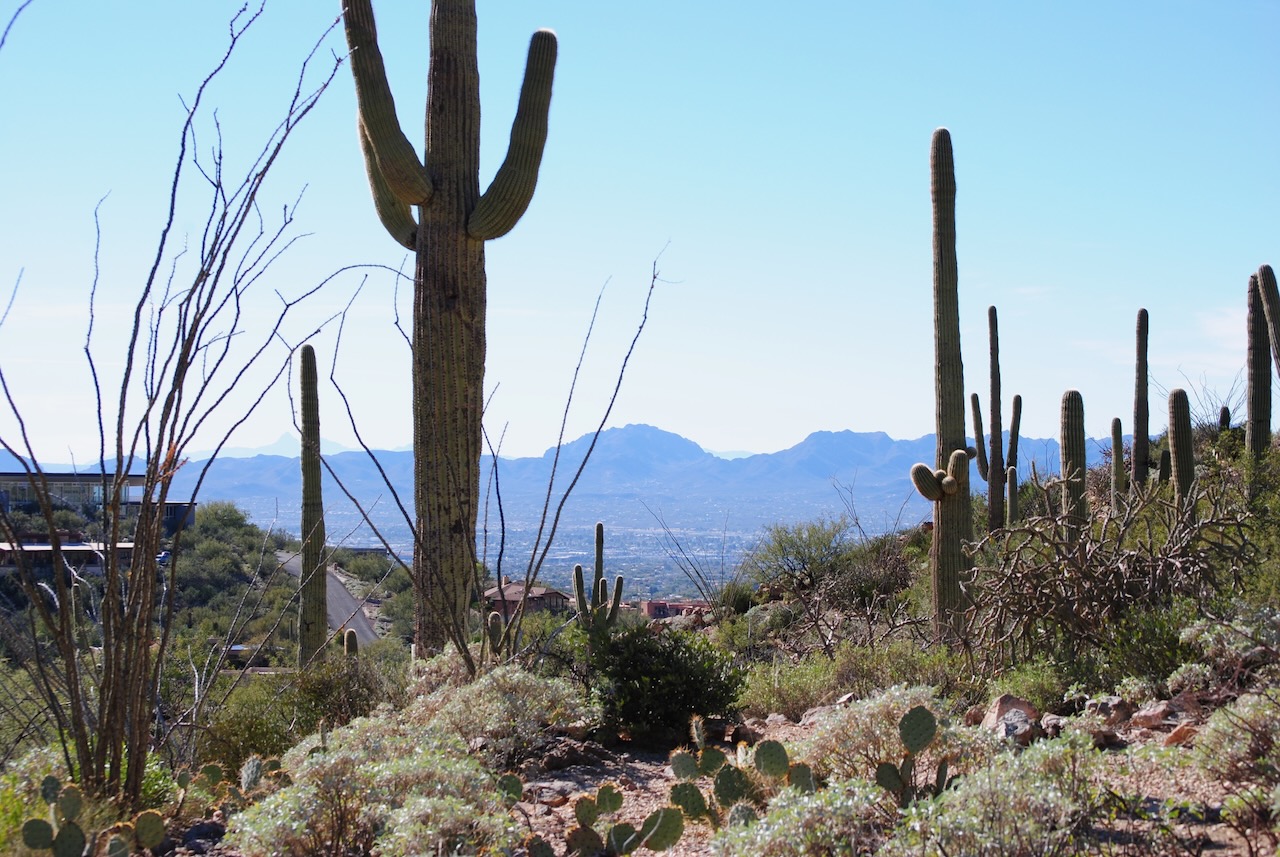
She had an in-depth knowledge of northern Arizona and of the culture of the people who lived there. This came from early visits to the South-West she’d made when she first came to the US, and from her vast reading. She talked about the Mesas, where the local tribes had found refuge from the invading Spaniards. You were fascinated. She lent us books about the Hopis and the Navajos, and some notes she’d taken when travelling in northern Arizona, about the Painted Desert and the fossil trees of that area. She turned out to be also a very good photographer, as she invited us to visit her collections online. There were pictures of the New York streets, of the East Coast and of the South-West, Colorado and Arizona. Much later, yo told me that Ursula had published several photography books, some of them erotic, and that you got interested in those. I think that she helped you working out what to do with the thesis material. But I was not unhappy when she went back to America, I felt, in a strange way, liberated. I don’t believe I was jealous, rather I feared her influence on you. For me Ursula was just a little too urbane, sophisticated, and, yes, not really German.
>>
Leave a Reply