


Pyramid as symbol
The symbolism of a pyramid is everywhere in our (European) culture, in economics, in business, in historical writing etc. At the top of the pyramid is the leader. The leader is there because of the ascendant on the other layers, below her, as we look down the pyramid. Of course this all depends on the context: is she a business leader, a religious or spiritual leader, is she there because of circumstances, or history.
The King
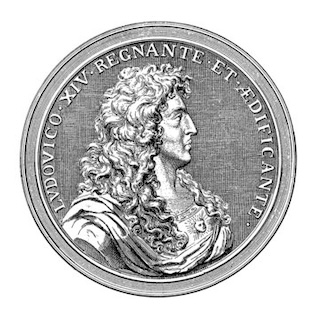
Thus Louis XIV was the King of France, the first gentilhomme of the kingdom, soon to become the example of the absolute monarch, because the Bourbons had inherited the crown, in a system of inherited monarchy. His later successor Louis XVI, unfortunately lost his crown and his head, in what historians describe as the French Revolution. The circumstances had changed, with them the acceptability of the monarchist régime, and plenty of vested interests wanted to plunder the Church, ally to the monarchy, and the properties of the aristocratic class.
The dictator
What succeeded was a military dictatorship mascarading as a new monarchy, and its leader was the general Bonapart(e), artillery officer, known for his prowess in Italy and Egypt, picked up by a small group of convention’s deputies around Sieyes, to defend their interests and not much more. In fact, to go back to the prompt, was Napoleon a “good leader”?
The views are not unanimous. The outcome of the 1st Empire (the disaster in Russia, Waterloo and all that) was an unmitigated disaster for France, economically, demographically and in the end politically. But was Louis XIV a “good King”, was Louis XVI a weak one? What makes a good leader? Hitler was considered, well into the 30’s, a wonderful leader, by a big section of British opinion, including by the aristocracy (remember Edward VI), in fact until 1939 and the onset of war. He enjoyed continued support by a majority of Germans until the end.
Art of War
It may be that leadership is indeed dependent as much on circumstances and culture, as on solely the qualities of the leader. A good leader has to understand her time, the motivation, the fears, the expectations of her supporters, or business associates. A good leader must understand the opposition, its strength, its weaknesses.
Today’s business leaders, for example the CEO’s of large corporations, the very same who meet every year in Davos under the umbrella of the so-called World Economic Forum, are often considered examples of socio- if not psychopaths at the top of their respective pyramid. In their case leadership is sometime summarised as their unique mission: shareholder value. This implies a total contempt for other considerations, such as social responsibilities, or environment health. Should we then reconsider what makes a good leader?
Responsibility
Perhaps an oft ignored quality of leadership is the ability to foresee the consequences of the leader’s actions and decisions. Napoleon ignores the possible outcome of his invasion of Russia. So did Hitler, and a few others. Enron and their advisers, appear to have ignored the logical outcome of their massive fraud, together with much of the delirious business press of the time.
Recently we heard of a prime minister signing a hundred year partnership with a government currently losing a murderous war, with an economy in ruins, and no prospect of recovering any time soon. Indeed we can see daily many examples of bad leadership, and when historical conditions are tense and fraught with risks (1814, 1929, 1938, 1963, 1991) those tend to increase. There cannot be a mediocre leader, or, rather, where there is, there disaster awaits.
Ancient Greece
What about collective leadership? This has been a historical reality in many countries, from ancient Greece to the US, where political authority is precariously shared between the executive (the president), the legislative (Congress) and the judiciary (the supreme court). This would take us to a consideration of the meaning of leadership in a democracy, the subject for another port.
Good leadership
In conclusion, sound leadership is characterised by a profound self-awareness and an understanding of the intricacies of relationships within the team and beyond. A good leader not only knows herself but also recognises the strengths and motivations of her supporters, as well as the perspectives of the opposition. This holistic understanding enables her to navigate challenges effectively and make informed decisions. Ultimately, the best leaders appreciate the weight of their choices, understanding that each decision can reverberate through their organisation and influence those around them. For students aspiring to lead, embracing these principles will foster the essential qualities needed to inspire and guide others towards a common goal.
Picture source
Feature photo: CC0 licensed photo by Saravanan S, a11n from the WordPress Photo Directory: https://wordpress.org/photos/photo/389677ba2b/
Leave a Reply