
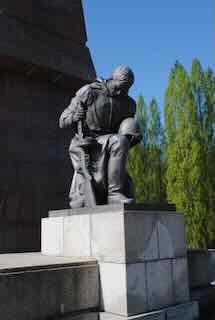
Childhood
This was the city of her childhood, the young officer knew its streets and buildings by heart. On the newly opened strategic highway she’d overtaken a long line of armour and missiles carriers, moving north in the direction of the ceasefire line, shaking the ground at the slow pace of prehistoric giants. “Someone is on the move,” she thought, “and not lightly armed”. The austere building of the Military Intelligence HQ, in D…, was off the new road, near the reconstructed airport, where, for months, fierce fighting had raged, only fifteen years back, when the enemy’s hordes were shelling the city, day and night.
Memories
Sophie Lavinsky was a little girl then, and she remembered the bombing, the dark basement, the fear, her mother’s anger. She also remembers the days, when, finally, the province had been liberated, the celebrations, the overwhelming sense of triumph, and her decision, founded in her childhood’s memory, to commit her life to the defence of her country.
As she approached the entrance, and showed her pass to the two marine guards, she thought of her mother, who had taught her the lessons of the Great War, and the sweet taste of victory. She parked her car near the Commanding officer’s building. Near the door a platoon of troopers in combat gear saluted her, she returned the salute with a smile. She climbed the stairs, checking her uniform and cap.
Briefing
She knocked at the door, under a sign that said: “Colonel Maria Suvorov, 3rd section”. The third section was the German section, charged with intelligence gathering on Alliance troop movements in the West and the North. A clear authoritative woman’s voice told her to come in. At the door Sophie saluted, a little stiffly, and stood to attention. Colonel Suvorov was walking towards her and shook her hand: “Welcome comrade! Sophie, this is general xxx who is taking part in our our briefing this morning.”
The older man smiled. Sophie saw the lines of campaign colours on his uniform jacket: from all parts of the world where the Federation had fought in the past decades… A single golden star medal was pinned to his breast. “Good morning comrade, please sit down. Colonel Suvorov has told me about you, lieutenant Lavinsky, and of your exploits at the last joint forces olympic games.” Sophie blushed.
Pentathlon
She had won the gold medal at the pentathlon, no small feat given the level of competition. They sat around a round table. A young NCO brought tea in silver cups. The small office was austere. At the wall hanged various photographs of officers, in majority female. One photograph was of a young Maria Suvorov, in the Syrian desert.
Colonel Suvorov looked at a note pad in front of her, and then to Sophie, a direct gaze the young woman held. “There is very likely to be a change in… “our friends’s policy,” she said addressing Sophie, and looking from time to time to the general. “Our friends” was pronounced with only a thin veil of irony. “Soon, events on the northern coastal cities will force us to intervene. The intervention will be massive, and there will be no cease fire line this time, until we are deep, deep enough to eliminate any shred of doubt about our resolve, in the minds of their politicians.” She added, after a pause, “of course we will limit the casualties.”
Resolution
“You should know,” the general said, while Sophie was registering the meaning of the colonel’s words, “that the mission we are about to explain to you, is of the utmost importance to that future campaign. We need, promptly, better intelligence on the population mood in the old territories, and specifically, Berlin. We have agents there, but we need fresh eyes and ears to confirm, and correct, some of the intelligence we have.”
There was another pause, Sophie was listening, knowing better than asking questions at this point. She’d learned from her early childhood to wait and listen. The colonel resumed: “We are sending you to Berlin for a short mission, a snapshot, with two main objectives. One, as the general just said, is to take a view of the spirit of the residents, their state of mind, now, and after the events in the east I have alluded to. We expect a favourable change in popular sentiment after that, but we will have to be sure.
Two, is to probe the view, particularly, of the expatriate community in the city. As you know the US neutrality, now that they are virtually out of of the Alliance, is no longer an issue: it’s an incontrovertible fact. Yet we have to know what westerners there think, what their concerns are, how their views of the Federation change, before and after we take action. I should add, for your understanding, that, in due course, there will be a new division of the country,” Colonel Suvorov smiled before adding, “this time not temporary.”
Questions
The general asked Sophie: “Do you have any burning question so far, comrade?” Sophie realised a new step was about to be taken in her life. “Only about the timeline for those events, and my move, Sir.” – “You are leaving tomorrow, the rest of today is about providing you with detailed information about where, who and what, and your contacts there.
You are fluent in both German and English, as well as French,” the colonel replied, “so, in addition to your well honed skills as an intelligence officer, you are the perfect choice for this mission. Events in the North are already at boiling point, as you know. We expect a serious provocation to take place within two or three months, possibly earlier. Our response will follow swiftly, within a couple hours…”
This post is the prologue of my novel Viktoria Park, written during my stay in Berlin (2016-20). It evokes the start of a war in a central European country.
Research
Summary:
The impact of war on children has had significant historical relevance throughout various conflicts. Childhood experiences during times of war have been marked by trauma, displacement, loss, and disrupted education. Understanding the effects of war on children is crucial for students to comprehend the lasting consequences of armed conflicts on young lives.
Report:
Title: The Impact of War on Children: A Historical Perspective
Introduction:
The purpose of this report is to explore the historical relevance of the impact of war on children. By examining the experiences of children during times of conflict, we can gain a deeper understanding of the lasting effects on their childhood and development.
Trauma and Psychological Impact:
Children exposed to war often endure severe trauma, including witnessing violence, losing loved ones, and experiencing displacement. These traumatic experiences can lead to long-term psychological consequences, such as post-traumatic stress disorder (PTSD), anxiety, and depression.
Displacement and Loss:
War disrupts the lives of children, forcing them to flee their homes and communities. Displacement not only separates children from their families but also exposes them to the risk of exploitation, abuse, and recruitment by armed groups. Additionally, the loss of family members, friends, and familiar surroundings further compounds the emotional toll on children.
Education Disruption:
War disrupts access to education, depriving children of their right to learn and develop. Schools are often destroyed, used for military purposes, or become unsafe environments. This disruption in education can have long-lasting effects on children’s intellectual and social development, hindering their future prospects.
Health and Well-being:
Children affected by war often face inadequate access to healthcare, nutrition, and sanitation facilities. This lack of basic necessities increases the risk of malnutrition, disease, and even death. The physical health of children is compromised, further exacerbating the challenges they face.
Long-term Consequences:
The impact of war on children extends beyond their immediate experiences. The trauma, loss, and disrupted education can have long-term consequences, affecting their future opportunities, mental health, and overall well-being. Understanding these long-term effects is crucial for addressing the needs of war-affected children and implementing effective support systems.
Conclusion:
The impact of war on children throughout history has been profound. Childhood experiences during times of conflict are marked by trauma, displacement, loss, and disrupted education. By recognising the historical relevance of this issue, students can develop a deeper understanding of the consequences of war on young lives and work towards creating a more peaceful and inclusive world for future generations.
>> Viktoria Park/1
Leave a Reply