


Mojave
Through the Mojave desert we drove North, feeling the first hints of a change in climate and vegetation, after Flagstaff, leaving the sacred San Francisco snow-capped mountain in the East. The air was much colder than near Tucson, even high up, with a sharp bite, the light more intense. The road engaged near a wild canyon. We stopped and followed the path. This was deep hidden country, a refuge for the Hopi tribes and cattle in the days of the Spanish invasion, small signs indicated the names of wonderful small trees and extraordinary cactii.
Millennia
The rocks were amazing of shape and colours. We looked at each other: we were alone, at least we were without much sign of the modern world. We hugged, knew that people had lived here for millennia, loved each other, brought up their children, fighting for their freedom and faiths. We continued our route from the canyon, to the magic forest, fossilised trees, that had ben transported here from the deep South thousands of years ago. The huge fallen trunks were like ancient prehistorical creatures. We walked among them, looking over the dry river bed, toward the painted desert, our route North, to the Navajo country.
Painted
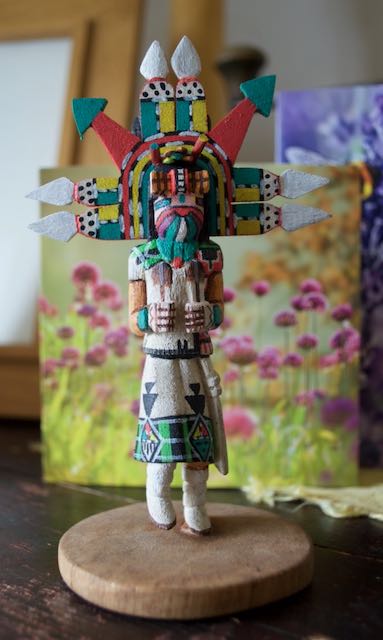
The painted desert is so called because of the beautiful colours of the rocks, tainted by a variety of lichens and small plants, created in the reflection of the Arizona sun. We still have nearly one hundred miles to reach the Mesas, deep in Navajo and Hopi country, and the ancient villages atop the mesas. In the village, set high on the Black (third) Mesa, we bought a little statuette of the Butterfly dancer, from a Hopi artisan. We both fell in love with her.
About
“Mojave Desert, arid region of southeastern California and portions of Nevada, Arizona, and Utah, U.S. It was named for the Mojave people. The Mojave Desert occupies more than 25,000 square miles (65,000 square km) and joins the Sonoran, Great Basin, and Chihuahuan deserts in forming the North American Desert. The Mojave extends from the Sierra Nevada range to the Colorado Plateau and merges with the Great Basin to the north and the Sonoran Desert to the south and southeast. It abuts the San Gabriel and San Bernardino mountains in the southwest.
Its desert climate is characterized by extreme variation in daily temperature, with frequent winter frosts, and an average annual precipitation of 2 to 6 inches (50 to 150 mm). Near the undefined Great Basin–Mojave border lies Death Valley (now a national park), the lowest point in North America. The Mojave has a typical mountain-and-basin topography, and its sparse vegetation includes creosote bush (Larrea tridentata), Joshua tree (Yucca brevifolia), burroweed (Isocoma tenuisecta), and occasional cacti (mostly species of Cholla). Sand and gravel basins drain to central salt flats from which borax, potash, and salt are extracted. There are also economically important silver, tungsten, gold, and iron deposits.”
All photos: ©2014-2016 Honoré Dupuis
<< Mesa
Leave a Reply to Dream Moonshine & Confession 71 – Glass-and-SandCancel reply