


A fallacy steeped in history
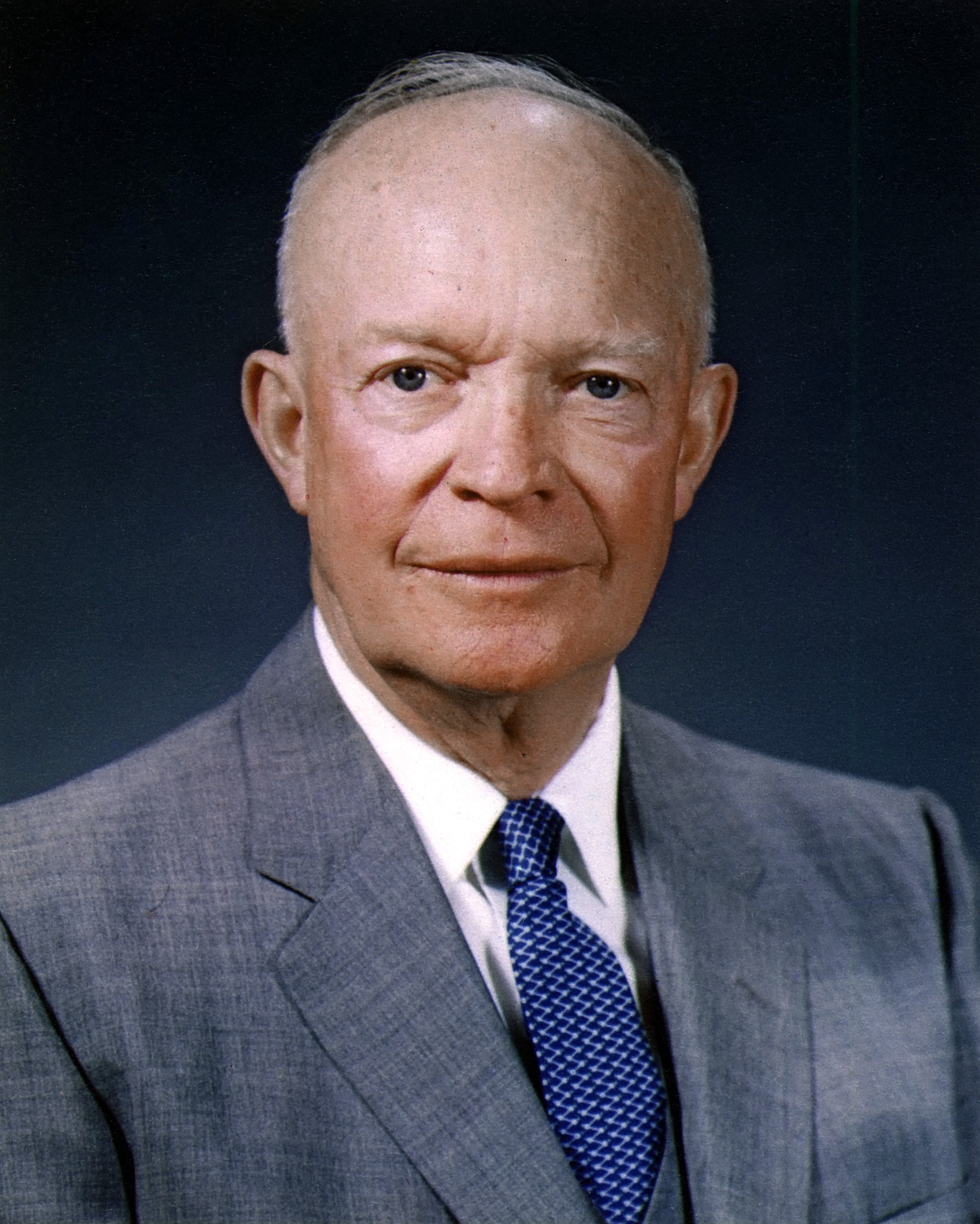
The answer is no, for the simple reason that the internet, meaning the internet protocols, are almost as old as me. The project that gave birth to TCP-IP and auxiliary norms was born from the US Department of Defence Advanced Research Projects (DARPA) office in the mid fifties. It was a creation, like Unix, of the US Industrial Military complex, denounced at the time of his departure form the White House by president Eisenhower.
Wikipedia: “Originally known as the Advanced Research Projects Agency (ARPA), the agency was created on February 7, 1958, by President Dwight D. Eisenhower in response to the Soviet launching of Sputnik 1 in 1957. By collaborating with academia, industry, and government partners, DARPA formulates and executes research and development projects to expand the frontiers of technology and science, often beyond immediate U.S. military requirements.[5]
The Economist has called DARPA the agency that shaped the modern world, with technologies like “weather satellites, GPS, drones, stealth technology, voice interfaces, the personal computer and the internet on the list of innovations for which DARPA can claim at least partial credit.”[6] Its track record of success has inspired governments around the world to launch similar research and development agencies.[6]
DARPA is independent of other military research and development and reports directly to senior Department of Defense management. DARPA comprises approximately 220 government employees in six technical offices, including nearly 100 program managers, who together oversee about 250 research and development programs.[7]“
The goal was to enable fast and reliable communication between industry, Universities and the Military. The question reflects a common misconception, in fact a deliberate fallacy, which confuses the internet with the World Wide Web, a much more recent development (early 90’s) invented by Timothy Berners-Lee at CERN, the Swiss based nuclear research lab.
Wikipedia: “Sir Timothy John Berners-Lee OM KBE FRS RDI FRSA DFBCS FREng (born 8 June 1955),[1] also known as TimBL, is an English computer scientist best known as the inventor of the World Wide Web, the HTML markup language, the URL system, and HTTP. He is a professorial research fellow at the University of Oxford[2] and a professor emeritus at the Massachusetts Institute of Technology (MIT).[3][4]
Berners-Lee proposed an information management system on 12 March 1989[5][6] and implemented the first successful communication between a Hypertext Transfer Protocol (HTTP) client and server via the Internet in mid-November.[7][8][9][10][11] He devised and implemented the first Web browser and Web server and helped foster the Web’s subsequent explosive development. He is the founder and director of the World Wide Web Consortium (W3C), which oversees the continued development of the Web. He co-founded (with Rosemary Leith) the World Wide Web Foundation. In April 2009, he was elected as Foreign Associate of the National Academy of Sciences.[12][13]
Berners-Lee is a senior researcher and holder of the 3Com founder’s chair at the MIT Computer Science and Artificial Intelligence Laboratory (CSAIL).[14] He is a director of the Web Science Research Initiative (WSRI)[15] and a member of the advisory board of the MIT Center for Collective Intelligence.[16][17] In 2011, he was named as a member of the board of trustees of the Ford Foundation.[18] He is a founder and president of the Open Data Institute and is currently an advisor at social network MeWe.[19]
In 2004, Berners-Lee was knighted by Queen Elizabeth II for his pioneering work.[20][21] He received the 2016 Turing Award “for inventing the World Wide Web, the first web browser, and the fundamental protocols and algorithms allowing the Web to scale”.[22] He was named in Time magazine’s list of the 100 Most Important People of the 20th century and has received a number of other accolades for his invention.[23]“
A web of confusion
The “Web” consists in a set of protocols based on Hypertext, a standard that allows documents written in a way to support links to others. Mainly the origin of the Web as document management system was due to the large and unwieldy mass of documents created at CERN. HTTP and its derivatives relies on the internet protocols, it’s another layer on top of them.
Most adults well remember the time before the “internet”, meaning before the Web. Further development of applications thereon, in particular e-mail and “apps”on mobile phones, made its use ubiquitous and indispensable. By the way, email was already, in a technical not very user-friendly messaging form was already one of the motivations for the “internet”. The attempt by predatory corporations to “customise” the web and introduce proprietary derivatives on what was initially a clean protocol made the whole issue of standards very complicated. Although the internet protocol proper is now at version 6, it has proven next to impossible to update to this version, despite its advantage in speed and management, because precisely of those proprietary add-ons.
Life before and after
So, what was life like before the “internet”? For those of us who are not glued to their smart phones, another fallacy for the innocent, basically us ancient dinosaurs, the answer is “before” is not very different from “after”. The reason is simple: like television, the mass media of choice for advertising, i.e. brainwashing the populace, a tiny minority of the world population, only took an occasional interest in all this. Deep down we see the whole fallacy as a dead end. Our main leisure occupation is reading.
We, at least this blogger, appreciate the value of hypertext when we write, that is when we write for others. This is about it. Ease of communication is, like most technical developments, from the battle axe to the car and nuclear weapons, a bit of a mixed threat, sweet at times (not sure about nukes), but lethal most of the times. Saturation of rubbish on the web meant, for some of us, retreating in our shells, meaning our books. Yes, I know, there is project Gutenberg, and all that archive. Bless generation X, or is it Z?!
Leave a Reply