

Time to Make Peace
Two uniformed officers are waiting for us at the new rail station, a place I used to know well, but now so completely changed as to be unrecognisable. Melissa and I wear sober travel clothes. On the train from the capital, we discussed the article that was published two weeks ago, initially in six countries, and then reproduced in virtually all the major newspapers of the planet.
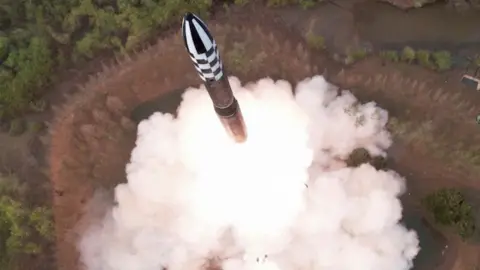
The article, titled “Time to Make Peace,” contained the pictures of the missing missiles, quietly resting on trestles in what appears to be a vast warehouse. The short text Melissa and I had prepared called for world leaders to disarm and invest the considerable resources so freed in curing the ills of the world.
Of course, as signatories of the article, we promptly had visitors. Besides, we were not hiding, having signed our real names. It is Sarah who opened the door to the four secret service men and one woman who knocked on the door of our house in London. Melissa was still with us.
The interrogation had lasted three hours. They wanted to know where we had been to take the picture, and also how we knew. We told them the truth. Melissa had received the pictures by post: yes she had the container, and, no she did not know who had sent them. Which was nearly true, too. As for the origin, and the why, and the how, in fact we did not know much more than they did. We said nothing of the Coven. An omission for Peace.
The military men who meet us at the station hand over to us passes that we must use at our destination. Melissa and I sit politely in the back of the command car. The four of us are silent until the driver takes a narrow road I think I recognise. Soon the road is bordered by dark pine trees that appear very old. Yes, I know where we are going, and so does Melissa.
Imperial Woods
She takes my hand in hers and squeezes. I remember the place. As children we played around it despite interdiction from our parents. It was merely a few years after the end of the war. The Great Power then had troops still stationed in this area which had seen so many battles. A regiment of combat engineers was barracked on this campus hidden in the woods, which dated from the 2nd Empire.
As a small boy I had tried to get a glimpse of what was inside, and perhaps to be there near the gate when the huge trucks came out, full of strange machinery and of those tall soldiers who smiled at us kids and threw oranges – oranges in the starving country! – at us. Was Melissa then one of the little girls that roamed around the camp, perhaps hoping for more than oranges?
The car stops at a gate, guarded by armoured vehicles. I recognise a truck with twin ground to air missiles. The perimeter is guarded by armed military police, and a little inside are huge satellite dishes. The international press is here, closely monitored by armed soldiers.
The car moves inside the perimeter, and takes a long road towards what appears to be an airfield. The place is even bigger that I remember; perhaps it was widened during the years of the Cold War? Or maybe even later, as this strange peace unfolds…
We now see the warehouse. It is a large building that may have once been a helicopter or light aircraft hangar. There is a little reception for us: four officers and one civilian. The officer – a general – who appears to be in charge, wears the national uniform, greets us as our escort drives away.
“Monsieur Dutoît, Mademoiselle Baudoin, it is a pleasure to welcome you here. I am at present the commanding officer here.”
He then proceeds to introduce his colleagues: an Air Force man who represents the Great Power (there are several platoons wearing various national uniforms in front of the hangar), and three officers, out of which we assume one is from the small country that did fire one of the missiles. The other two are members of the Alliance. The civilian is introduced as the representative of the Great Power to Be.
We exchanged handshakes and polite smiles. The officer explains, “We want first of all to thank you both for your cooperation, and coming all the way to this place. Of course, you are both from military families and have a deep sense of duty.” I thought: military brats for peace?
We are then led toward the entrance of the hangar. Inside, a double line of soldiers guards the missiles that lie on the trestles behind a short electrical barrier. White overall-clad scientific types are busy around the three sinister but impotent objects. The press corps has been corralled into a little square in front of a long table where we and our guests are soon invited to sit. Armed soldiers stand behind us. The journalists look a little subdued; there are two dozen television cameras directed at the two seats where Melissa and I now sit.
Act of Hostility
The local officer makes the introduction. His speech is concise and without too much emphasis on the strangeness of the situation. “Miss Baudoin and Mr Dutoit have written the text that called for world peace exactly, at the time when an act of hostility was neutralised in as yet unclear circumstances”, the officer surmises, and he adds to the attention of the TV cameras, “The information that Miss Baudoin and Mr Dutoit have provided to the military authorities is of course classified. The Press may ask questions now.”
Then the questions rain on us. Melissa answers most of them, smiling, in full control. I guess she has been briefed by Gabrielle. The journalists start asking her personal questions. The general intervenes firmly.
I am then asked if I have a clue as to who hijacked the missiles. The prepared reply has been agreed beforehand with the secret service agents. I do not know and expect it is a ‘friend of the United Nations’, a friend of peace. Indeed, I see as I speak the United Nations colours against the back wall of the hangar.
The session is over in less than an hour. The press is asked to leave the hangar and stay confined in offices that have been placed at their disposal on the campus. Then our group walks slowly to get closer to the missiles. The Great Power officer says “You will have noticed the presence of Colonel Li” – the man we believe to be the representative from the divided country where the missiles were fired – “which is of great help to all of us.
We recognise though, that there is yet no explanation as to how the three missiles got here. The camp is still under military authority and safeguard, and has never ceased to be, but there was no witness of the missiles coming here. This hangar was locked…”
We shake our heads without comment.
The general invites us to a small office on the side of one of the hangar’s walls. Several other offices are occupied by the “scientists” and telecommunications equipment.
“You were very helpful to our colleagues in London. I want to make sure you know that, at any time, if you wish to make an additional statement this will be welcome. We will keep the press off your back, both of you. On the other hand, we would be pleased if you were also available to us, by telephone, on a 24 hours/seven days basis.”
Interested in your lineage
He smiles. We know. The Asian “civilian” then speaks to Melissa in a courteous and fluent voice, in perfect English. “Miss Baudoin, the general is too much of a gentleman to bother you with historical details. Nonetheless, I wish to let you know that my superiors,” – as he says that I know that he must be himself a pretty high ranking officer in the developing Air Force or Navy of the Great Power to Be – “my superiors are very interested in your lineage.”
Melissa smiles. I suspect her true identity has been manipulated by Gabrielle to skip the difficult question of her real age. I look through the window of the office at the three missiles. I have no doubt they have been teleported here. But why here? Why are all the paths leading to the Coven converging on this little town?
“Yes,” resumes the general, “we expect new developments and your help will be invaluable.”
Then the Air Force man asks “Do you have any question for us?”
We have expected this and Melissa has the answer. “Sir,” she says, smiling, “we trust you will support the request in the article we wrote, for it to have some effect for the sake of all the people of the world.”
They all smile and the general says that the fact that they are here, talking with us, in front of the international press, shows very well how seriously the article has been taken. I remember the words of Helga. Part of me feels a sense of dread, how seriously is really a matter of how quickly the world governments will act, for peace.
They invite us to a simple lunch in the officers’s mess. At the table sit officers in many different uniforms, in conversation in a variety of languages. Then, as if in a dream, I see a tall woman in uniform speaking in German to a senior officer of the Luftwaffe. It is Helga.
<< Smooth Pebble on the Wild Shore
>> Capital City, Love and Death
Picture: Hwasong-18 missile launch (Source: BBC)
Leave a Reply